
BOMBANANA Call the module, then press once
Wires, direction, keypad, switches, and fourteen new puzzles with no fake answer keys.
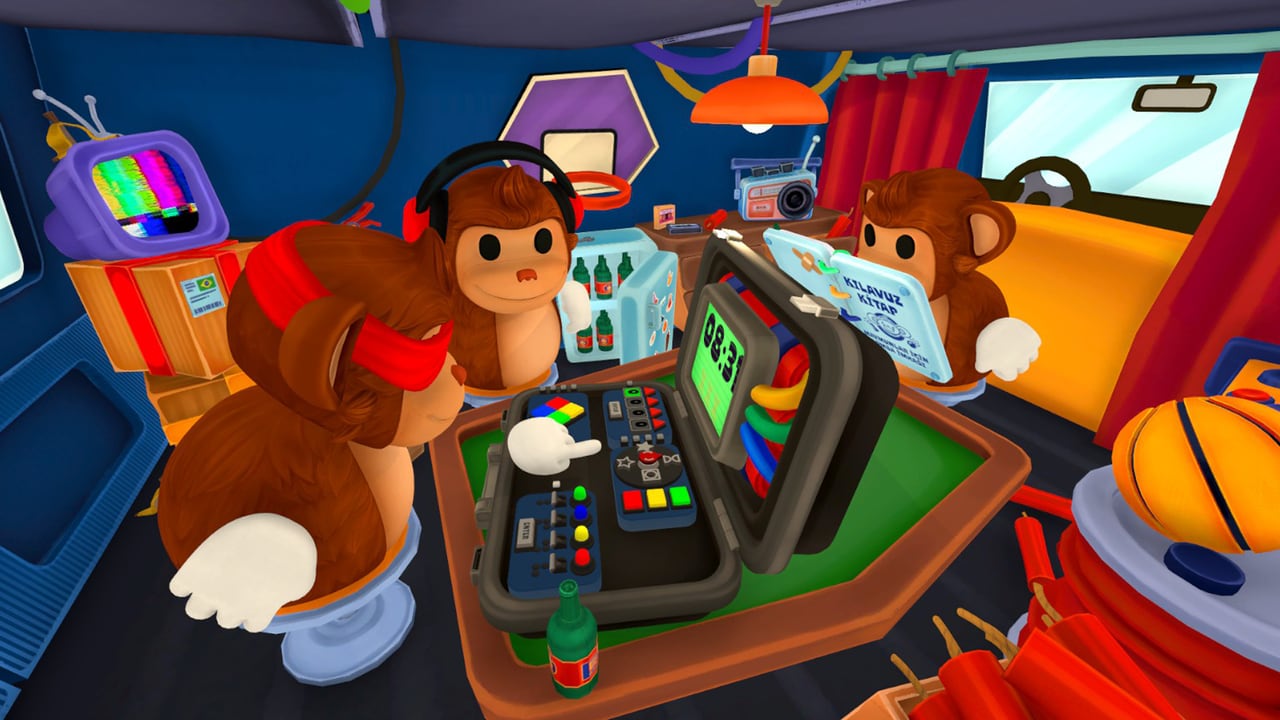
Every BOMBANANA bomb is a stack of modules. Each module is a small puzzle with its own manual page, and none of the three monkeys can solve it alone. Mute Monkey has the book. Deaf Monkey has the picture and the voice. Blind Monkey has the hands. If you skip the names and shout colors into the void, Mute opens the wrong page and Blind cuts the wrong cable.
This page is a process guide, not a cheat sheet. The in-game defusal manual is the only complete table. Lefto randomizes enough of the work that a website cannot honestly tell you which wire is safe on your bomb. Teams who played the demo reported stable information packages for four families. Treat those reports as a callout order, not as an official key that still matches every Campaign bomb.
New players should finish Getting Started first. Rank how nasty each family feels on the module tier list. Role limits are on the players hub.
The sentence you say every time
Use one shape for every module:
- Name the family and where it sits on the casing.
- Read the details that family needs, in a fixed order.
- Wait while Mute finds the manual cell.
- Hear or see the answer.
- Blind repeats the action as both a label and a physical target.
- Deaf confirms.
- Blind makes one input.
That loop is the whole game. Communication explains why Mute to Deaf to Blind is the default direction. Controls explains why you bind emotes and interact so that step 7 is a single press. If anyone talks over step 2, restart the sentence. A half-read wire list is worse than a slow one.
Wires
Wires, sometimes called cables, are the teaching family. Deaf counts the wires first. The count picks a manual row. Then Deaf reads colors left to right. Then Deaf names the LED. Mute crosses row and column and signals which wire to cut. Blind repeats the color and the position (second from the left, the blue one) and cuts once.
Teams reported that three-wire bombs and four-wire bombs do not use the same rule, which is why the count has to lead. Empty slots happen. Describe the panel as it exists, including gaps, so Mute does not pick a four-wire page for three cables and a hole. Cutting is permanent. There is no practice snip.
Left and right are Blind’s left and right. If Deaf is looking from the tail of the van, they still translate into Blind’s body. Argue about that in the lobby, not after a boom.
Direction / D-pad
Direction modules ask for a press on a pad. The package teams reported is the active LED plus a center value. Sometimes that value is a number Deaf can see. Sometimes it is braille only Blind can read by touch. Mute converts that pair into a direction. Blind presses that direction from their own orientation.
If a wrong press changes the module, call the new state as a new sentence. Do not reuse the old LED. Do not say my left unless you are Blind. Deaf can watch the pad to confirm the press registered, then tell Mute to stay on the same page or flip.
Numpad / calculator
This family is where time goes to die. Deaf reads the full equation out loud, including operators, then says whether the result is odd or even, then names the LED if the manual cares. Mute does not want a rounded guess. They want the expression.
The keypad is jumbled. The number glyphs are not in telephone order. Blind must press the glyph they were told, not the slot where a phone puts that number. If Deaf says press 4, Blind finds a 4. If Deaf says bottom left because they panicked, you are now solving a different puzzle that the manual does not contain.
Blind should call each digit as it clicks so Deaf can see the sequence land. If a glyph does not depress, stop. Do not invent a second 4 on the other side of the pad.
Switches
Switch panels punish partial reads. Teams reported that Mute needs the full light order and the numbers before anyone arms Enter. Deaf should not drip one switch at a time unless Mute asked for a drip. Read the lights in a named order (top to bottom or left to right, pick one and keep it), then the digits, then wait.
Blind flips only the switches in the answer, then waits on Enter. Enter is the cut equivalent: it commits. If the lights change after a hazard, reread the whole panel. A power outage in Campaign is a new module state wearing the old plastic.
Fourteen new modules and three CHAOS jobs
The full game adds fourteen new puzzle modules: eleven standard families and three CHAOS modules designed to keep Blind Monkey busy. Lefto has not published a public encyclopedia of those tables, and this wiki will not invent names, wire counts, or fake glyphs to look complete.
What you can train now is the same sentence. If a new module shows a grid, Deaf names the family, the position, and every visible channel (lights, labels, counts) before Mute turns a page. If a CHAOS module starts demanding extra hands from Blind, that is the point: Blind cannot idle while Mute reads. Park a wait emote on the other modules, let Blind finish the busy work, then return to the quiet puzzle. Do not let Deaf hold two answers in their head for two modules at once unless your trio has already survived Campaign Levels without mixing pages.
When a new family wrecks you, write down the information package on the callout sheet after the round. Next bomb, lead with that package. The module tier list is for ranking pain, not for replacing the manual.
Order of work on a busy bomb
Clear the smallest information package first when the timer is short. Wires are often that package. A calculator with a long expression is not. CHAOS that occupies Blind may have to interrupt that plan; if Blind is stuck on a busy module, Mute and Deaf should not stack three more answers for a pair of hands that is not free.
One module, one owner of the mouth. Deaf speaks. Mute gestures. Blind repeats. If you want a second talker, you are playing a different game. Playing Co-op is where public lobbies forget this and everyone names a color at once.
Hazards still count as module state. Loud noise means Blind missed the last sentence. Obstructions mean interact may hit the wrong object. Outages mean LEDs you named may no longer be true. Resume from step 1 of the sentence, not from step 5.
Practice in Custom if you want a bomb made of only keypads, or a bomb with a fat mistake limit while you learn CHAOS. Campaign is the authored mix. Endless will keep rolling families you are bad at. That is educational and also a way to tilt a friendship. The mode rankings help you pick the drill.
When you can say a wire list without staring at this page, you are ready to play for real. Keep the manual in Mute’s hands. Keep fake internet tables off the second monitor. The bomb on the table is the only bomb that counts. More walkthroughs sit on the guides hub. If you want a buyer’s take after a night of modules, read the BOMBANANA review.
Frequently Asked Questions
Quick answers for three-player bomb runs.
Why won't this wiki tell me which wire to cut?
Because the cut lives in your in-game manual and depends on the count, colors, and LED on that bomb. Puzzle Modules teaches the callout order, not a spoiler table.
What is the keypad trick in BOMBANANA?
The glyphs are jumbled. Press the number you were told, not the telephone-pad position. Bind a clean interact on Controls so Blind does not mash a corner.
What are CHAOS modules?
The full game adds three CHAOS modules meant to keep Blind Monkey busy, plus eleven new standard families. Do not expect a public answer key here.
Should we solve every module in parallel?
No. One module at a time unless Blind is occupied by CHAOS. Mute and Deaf should not hold two answers at once. See Communication.
The demo had different modules. Is this page for the demo?
This page is for the released game. Demo-era wire, direction, keypad, and switch callouts are listed as team reports. Campaign now includes thirty levels and extra families. Read Campaign Levels.