
BOMBANANA Module Rankings
Wires through CHAOS, ordered by how hard they are to call and how fast a wrong input ends the bomb.
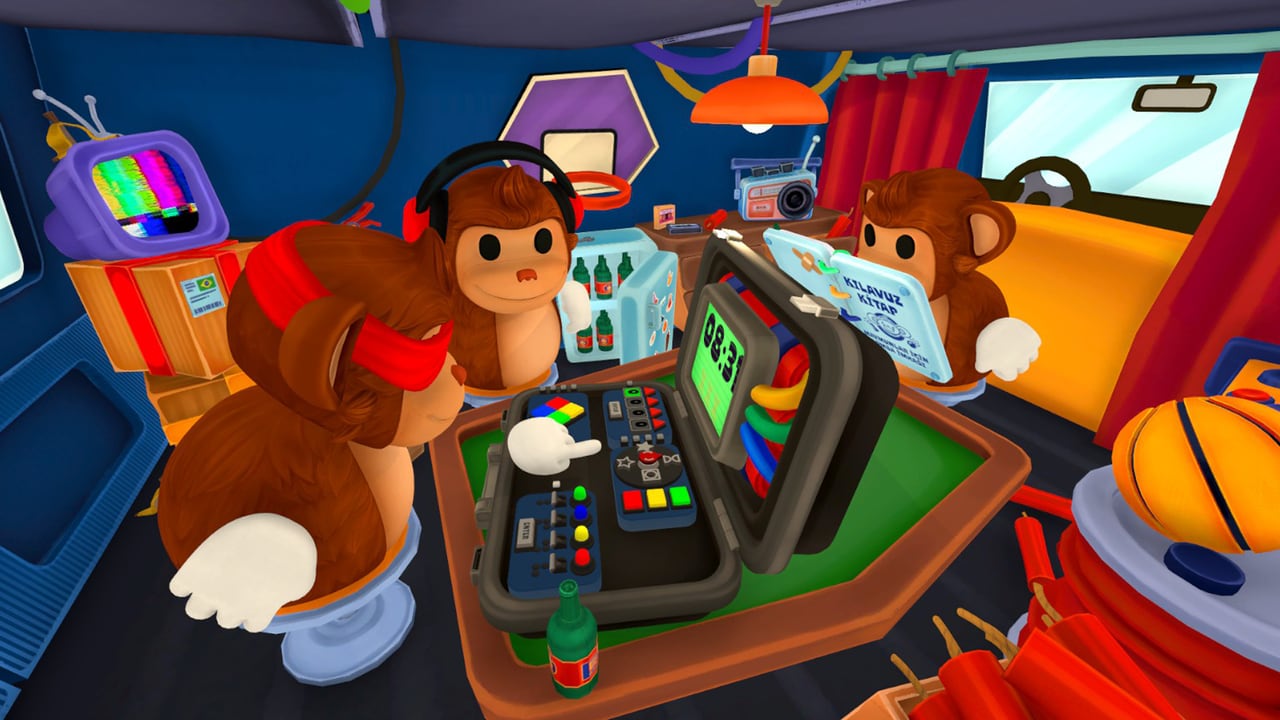
This list ranks BOMBANANA puzzle families by communication load and timer risk. It is practical team advice for Lefto Studio’s Steam release (app 4656000, TARK, September 2, 2026), not an official power ranking and not a damage chart. There is no DPS. There is a timer, a mistake budget, and a triangle that has to finish a sentence before Blind Monkey touches anything.
Use it with role rankings and mode rankings. How-to steps live in the module guide. The callout shape never changes: module name, position, the details that module needs, the manual answer, repeat-back, confirm, then input. Left and right are Blind’s left and right.
How the ranks were built
Communication load counts facts that must cross Mute-to-Deaf (gestures) and Deaf-to-Blind (speech), plus any tactile report only Blind can give. A family that needs count + colors + LED is lighter than a family that needs math + parity + threshold + LED + a jumbled pad.
Timer risk counts irreversibility and recovery cost. A wrong wire is gone. A wrong D-pad press can change the panel and force a full re-read. Switch Enter commits every toggle at once. Endless waves raise risk on every family; Campaign’s 30 levels lower it by teaching one type at a time. Custom knobs can move a family a full rank if you strip the clock or stack hazards (outages, noise, obstructions).
Unnamed launch modules are grouped, not hallucinated. The full game added fourteen puzzles: eleven standard, three CHAOS aimed at keeping Blind busy. Until your manual page names them, do not copy streamer titles into this wiki.
Practical order (lowest talk load to highest)
Wires — low talk, medium risk
Deaf calls count, then colors left to right from Blind’s left, then LED. Mute finds the cell. Deaf speaks the cut as color and index. Blind repeats and cuts once.
Why it sits low: the packet is short and the table is a single intersection. Why it is not free: the cut cannot be undone. Teams die here by skipping the count (three-wire and four-wire rules differ) or by reading from Deaf’s left. Drill Wires first in Getting Started until the packet is boring. Then stop treating it as warm-up you can talk over.
Direction / D-pad — medium talk, medium risk
Blind reports the center braille. Deaf reports the LED. Mute encodes an arrow. Deaf speaks that arrow from Blind’s body, not from a pretty camera.
Load goes up because two senses must meet in the book: touch and light. Risk goes up when a wrong press restates the module and people reuse the old LED. Re-read from scratch after a miss. Pre-map arrows to numbers so Mute is not dancing; the callout sheet should show that map before the lobby readies.
Switches — medium-high talk, high risk
Deaf must deliver the full light order and the full digit string before anyone flips. Mute solves the whole pattern. Blind sets one toggle at a time, confirms by feel, and only then hears Enter as its own sentence.
Talk load is a long packet, not a hard one. Timer risk is the Enter key. A 50/50 left on the last switch is how Campaign wipes look like “we almost had it.” CHAOS and airplane obstructions make this worse because Blind’s hands leave the panel to deal with the room. If that happens, re-feel every toggle before Enter. Do not trust memory.
Numpad / Calculator — high talk, high risk
Deaf reads the expression, speaks the raw result, flags odd/even and any greater/less test, plus LED. Mute picks the branch; the raw result is often not the key. Blind presses the named digit wherever it sits on a jumbled pad, not the place a phone pad would put it.
This is the demo-era time sink and still the teaching wall. Priority traps (odd and greater than five at once) are Mute’s job. If Deaf speaks 67 as if that were the answer, the triangle has already failed. Rank Numpad above Switches on talk load even if your group “likes math,” because the packet is longer and the pad layout lies.
Eleven new standard modules — high talk, mixed risk
Launch added eleven standard puzzles on top of the four families above. Without stable public names, the honest rank is: expect at least Numpad-level packets (new visible facts, new manual branches) and do not parallel-call them. Learn each one in Campaign or in Custom with that type isolated and the timer generous. After you have the page, slot the family next to whichever demo module it most resembles: short packet near Wires, multi-step commit near Switches, mixed-sense near Direction.
Update your night’s order in the van, not on this page, until names and packet shapes are consistent across patches. Watch patch notes and launch notes for table changes.
Three CHAOS modules — high talk, highest operator risk
Lefto Studio described CHAOS as special modules designed to keep Blind busy. That is an operator-load rank, not a lore tag. While Mute is still in the book, Blind may already be mid-input on a CHAOS panel. Communication load stays high because Deaf must keep packets serial. Timer risk is highest because a busy operator is the person most likely to skip repeat-back.
House rule that belongs on this list: no second CHAOS action until the first repeat-back is done, even if the panel is screaming for attention. If Endless throws CHAOS plus Numpad plus a power outage, you are not under-ranked. You picked the wrong mode. Drop to Campaign or strip Custom knobs.
Practice order versus unlock order
Campaign will not always hand you the lowest-talk family first. Play the unlocks as the campaign walkthrough describes, but when you choose Custom drills, follow this list from Wires upward. Endless is a stress test of the top of the list, not a classroom.
Hazards are multipliers. A Wires cut in the dark is no longer low talk — Deaf cannot name colors they cannot see. Hold, clear the outage or obstruction, re-read. Noise hurts Mute’s audit of Blind more than it hurts Deaf, who already hears nothing. Factor that when you enable Custom hazards; do not pretend Wires stayed in the bottom rank.
Colorblind modes (two types) reduce LED and wire misreads for Deaf and Mute. Enable them in lobby setup if the palette smears. They do not move CHAOS down. Random role button does not change a family either; seats still have to match the packet. See the roles hub and Deaf Monkey if your speaker cannot hold a long Numpad sentence.
What not to do with this list
Do not skip Wires because they are “easy” and then die on a four-wire LED you never practiced saying. Do not farm Endless until Direction left/right is locked. Do not download an unofficial solver and call that a tier. The manual on this bomb is the table. This page only orders the conversation.
For controls on jumbled pads and emote wheels, use the controls guide. For the triangle itself, Mute Monkey and the communication guide. Return to the tier list hub when you need to reseat or pick a mode instead of a family.
Frequently Asked Questions
Quick answers for three-player bomb runs.
Is Numpad really harder than Switches?
On talk load, yes: longer packet, branch traps, jumbled keys. On timer risk, Switch Enter can be worse because it commits the whole panel. Drill both, in that nuance, not as a single score.
Where do CHAOS modules sit?
Highest operator risk. They keep Blind busy while Mute is still encoding. Keep packets serial. Compare seats on role rankings.
Why are the fourteen new modules not named?
This wiki will not invent titles. Launch added eleven standard and three CHAOS. Rank them by packet length after you see the in-game page. Track table changes in patch notes.
Does Campaign use a different order?
Unlock order is paced teaching. This list is practice order by talk load. Follow campaign in the van, then use Custom to drill the next family on this page.
How do hazards change a rank?
Outages block color callouts. Obstructions steal Blind's hands. Noise covers the repeat-back Mute has to hear. A "low" family is no longer low until the room is clear. Mode context is on mode rankings.
Should we always start with Wires?
For drills, yes. For a live Campaign bomb, start with whichever module is on the case, but keep Wires packets honest. Sentence shape is on the callout sheet.